

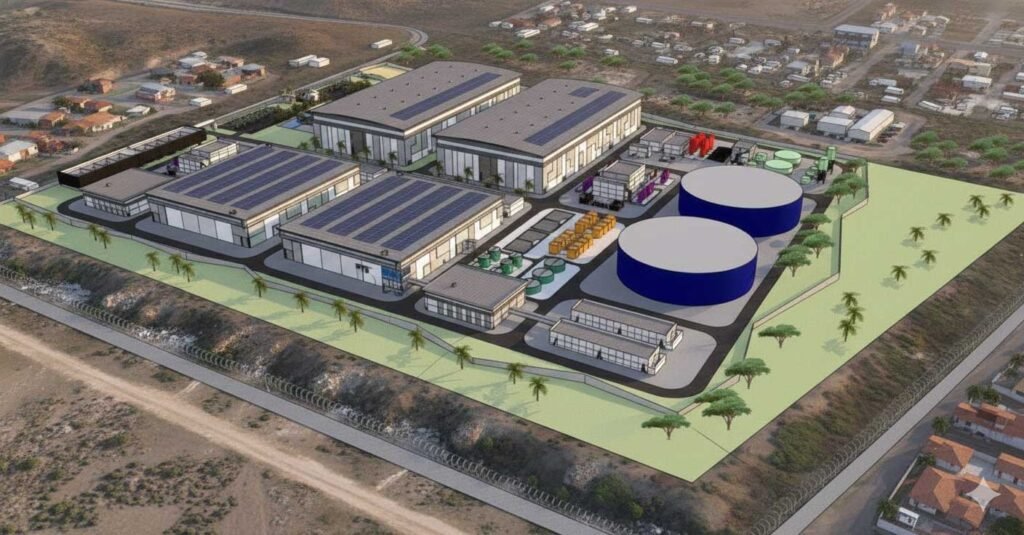
If you’ve lived in Baja long enough, you’ve heard about the Rosarito desalination plant the way you’ve heard about flying cars. Always “coming soon.” Always “in the works.” Always one more meeting away.
This week, it stepped back into the land of the living.
Mexico’s president Claudia Sheinbaum acknowledged the bid process has been delayed, but said the project is still on track, with the executive plan ready and the environmental side being addressed. Federal water officials have pointed to construction starting around late March or early April 2026.
The original dream and why it blew up
The Rosarito desaladora has been on the drawing board for years because the northern coast’s water reality is a bit awkward. Tijuana and Rosarito lean heavily on imported Colorado River water, and that supply faces long-term cuts and tighter rules in the U.S. system. A big seawater plant on the Pacific has always looked like the obvious backup plan.
Back in the late 2010s, the project was pushed as a public-private partnership, with financing interest from development lenders and a long contract structure. That version turned into a political and financial fistfight. Critics warned the state would be locked into paying for water for decades at a steep monthly cost. In 2020, then-governor Jaime Bonilla’s administration cancelled the contract.
Canceling it wasn’t the end. It triggered legal disputes and claims for damages from the companies involved, and the whole thing became another Baja classic: infrastructure plus litigation, served hot.
The reboot and the newest plan
The current version is framed as a federal project tied to Mexico’s National Water Plan. It’s still the same big idea, but with a different structure and new timelines.
Key numbers being repeated by officials and project listings are:
- Initial capacity of 2,200 liters per second, with longer-term talk of doubling later.
- A total investment that’s been reported around 11 billion pesos in official project sheets, with some local officials citing higher totals depending on what’s included.
- Service coverage aimed at Rosarito, a large slice of Tijuana, and part of Ensenada.
The procurement process hit turbulence. In late November 2025, Conagua declared the first construction tender deserted because proposals didn’t meet requirements or exceeded budget, depending on the report. The expectation since then has been a re-licitation and schedule adjustment, not a burial.
What changes if it actually gets built
On the upside, a functioning desalination plant is a new faucet for a region that keeps growing while the climate keeps saying “good luck.” One report has described the project as potentially boosting supply to Tijuana and Rosarito by up to about 45 percent. That’s the kind of number that makes water managers sleep for the first time in years.
It also spreads risk. If the Colorado River allocation shrinks further, Baja is less stuck waiting for someone else’s weather to improve.
On the downside, desalination is not magic. It’s engineering. And engineering sends invoices.
Desalination tends to be energy-hungry, which often makes it more expensive per liter than water from rivers or aquifers. If energy costs rise, water costs can follow. That’s one reason the earlier PPP version got attacked so hard.
The environmental pushback you’ll keep hearing about
This is where the debate gets loud, fast.
The big environmental concerns with seawater desalination are usually three things:
- Intake impacts Pulling huge volumes of seawater can trap or harm plankton, larvae, and small organisms.
- Brine discharge The process produces concentrated salty wastewater (brine). If it isn’t dispersed well, it can stress marine ecosystems near the outlet.
- Footprint and energy More power demand can mean more emissions, depending on the grid and the project design.
For Rosarito, the project’s environmental documents and reporting have emphasized a specific mitigation: using existing seawater intake and discharge infrastructure from the Presidente Juárez thermoelectric plant site, and mixing brine with other flows to dilute salinity before it returns to the ocean.
That mitigation helps, but it doesn’t erase public concern. Mexican media coverage of the MIA has described dozens of potential impacts and the need for monitoring and safeguards.
So, is it happening this time
Right now, the most honest answer is: it’s closer than it has been in years, and it has federal backing again.
Sheinbaum publicly reaffirmed it despite the bidding delay, and officials are attaching real months to the start date. In Baja terms, that’s practically a signed contract and a ribbon waiting in the trunk.