

Ensenada’s police just got something rare in public safety. A second set of eyes that doesn’t blink, doesn’t get tired, and doesn’t “forget” what happened right after everyone starts arguing about it.
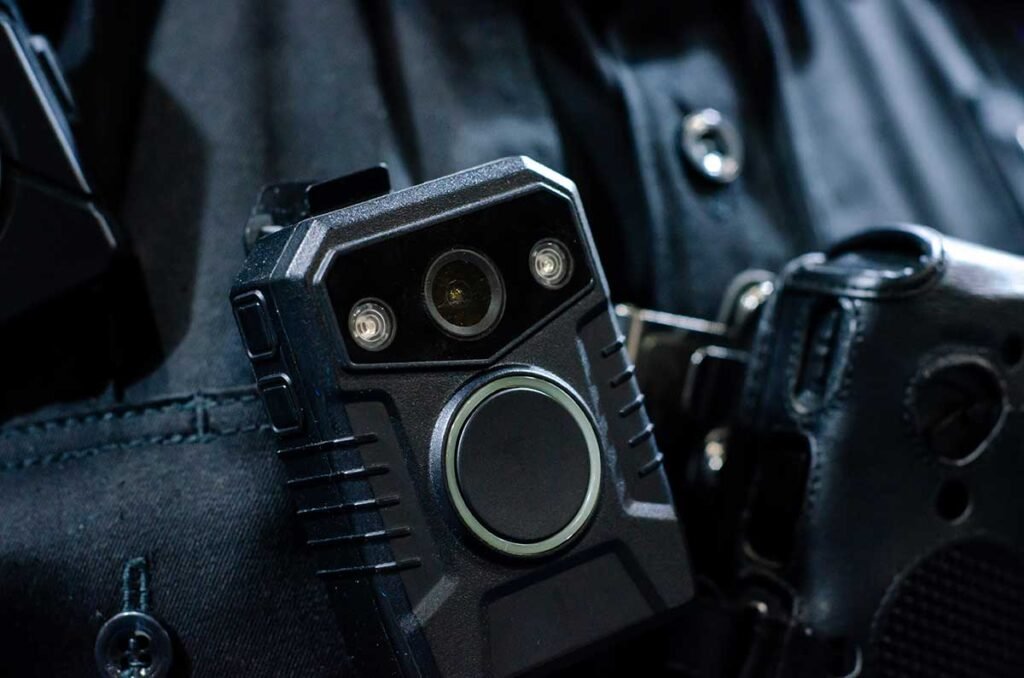
As part of the city’s push toward international CALEA certification, Ensenada’s Dirección de Seguridad Pública Municipal handed out 90 body-worn cameras to municipal officers on Monday, February 9, at the Riviera’s Salón Rojo. The stated goal is simple and overdue. More transparency for the public, more protection for officers, and fewer “he said, she said” moments that turn into long complaints with zero proof on either side.
Now for the scale check. Ensenada isn’t a tiny department. Public reporting has put the municipal force at around 800 active officers in recent years, which means these first 90 bodycams would cover about 11% of the on-duty ranks in this opening rollout. In other words, this is a real start — not a full makeover. Yet.
What the cameras actually do
These aren’t cheap little clip-ons from a gadget aisle. Each camera is assigned to an individual officer for personal, exclusive use. The specs sound like something you’d want on a hiking trip through the desert at night.
Battery life is about eight hours. They record audio and video, include night vision, GPS, and an emergency alert button. Officers can also communicate directly with the C5 monitoring center, and the whole system is designed to capture, transmit, store, and manage daily footage with dedicated software, a database, and the tech infrastructure behind it.
The price tag for the first phase is reported around 7 to 8 million pesos, and that figure includes more than just devices. You’re paying for the digital plumbing too.
Footage retention and public access
Here’s the part citizens will care about most. The recordings are expected to be stored for up to 45 days. During that window, people can request access if they’re filing a complaint or a report. That’s not forever, but it’s long enough to stop most situations from evaporating into rumors.
And no, officers aren’t supposed to casually switch them off. The reporting says they cannot be deliberately turned off, except if there’s a technical failure. Unjustified shut-offs or misuse will count as a violation under the city’s rules, which are being consolidated through a specific regulation headed to the security commissions.
Why this might actually help Ensenada
Bodycams are one of those ideas that sound obvious until you realize the real value is boring and practical.
They can protect citizens from misconduct. They can protect officers from false accusations. They can improve evidence quality. And they can make everyone behave a little better when they know the moment is being recorded.
The research isn’t perfect, but there are solid signals. A Campbell systematic review found body-worn cameras were associated with a reduction in citizen complaints, with an estimated average change around 16.6% fewer complaints (with uncertainty across studies, because real life is messy).
The U.S. National Institute of Justice also summarizes multiple evaluations, with some departments showing statistically significant reductions in complaints and use of force, while other studies show little to no effect. Translation: policies and real enforcement matter. Cameras don’t fix everything by existing.
One famous randomized trial out of Rialto, California, reported a sharp drop in use-of-force and a big decline in complaints per 1,000 police contacts during the study period. It’s often cited because it was one of the early rigorous tests.
What comes next
City officials say this is just phase one. A second phase is expected to add more cameras, especially for units with heavy public contact like Traffic, K9, Tourist Police, the Valle de Guadalupe rural unit, and the Missing Persons search unit.
There’s also a training and “socialization” rollout planned, plus a field testing period to catch tech issues like dead zones without 3G, 4G, or Wi-Fi coverage. In Baja terms, that’s not a “maybe.” That’s a Tuesday.
The bottom line
If Ensenada wants this to work, the cameras need three things. Clear activation rules, real consequences for “oops it wasn’t on,” and a storage system that doesn’t mysteriously fail when someone asks uncomfortable questions.
Still, it’s a strong move. Ninety cameras won’t change everything overnight, but they do change one major detail. Now the story can come with playback.