

If you’ve ever felt that sinking feeling pulling across the border into Tijuana, wondering whether today’s getaway might turn into a hassle, you’re not alone — and you’re not imagining things.
Business and tourism leaders across Baja California are sounding the alarm. What was once a booming destination for restaurants, nightlife, medical tourism, and quick weekend escapes from California has hit a rough patch — not because of beaches or tacos, but because some officers with badges have become as infamous as the city’s nightlife.
Tourism Takes a Hit When the Police Turn Predators
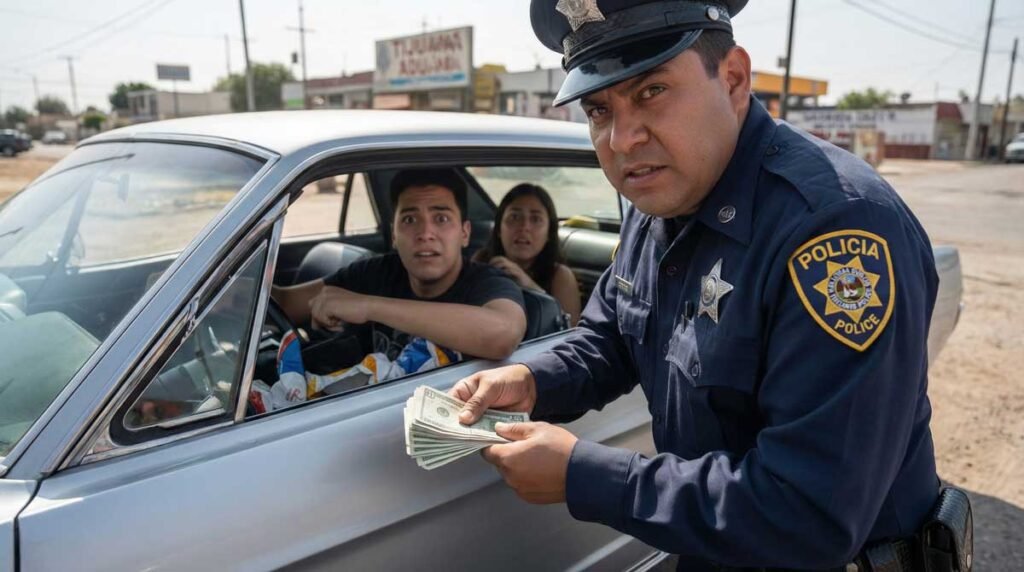
In Tijuana, the Cámara Nacional de Comercio (Canaco) has publicly warned that alleged police extortion and harassment of tourists isn’t just a rumor — it’s driving travelers away. According to local business leaders, mostly visitors from Southern California are being stopped for minor issues like tinted windows, out-of-state license plates, or rented cars — and then pressured for fines or bribes.
What’s even more chilling? For every one traveler who has a bad run-in with police, estimates from the business community suggest 20 to 25 others hear about it — and decide not to come back. That kind of word-of-mouth has become a self-inflicted wound on the local economy.
A Note We Print for a Reason
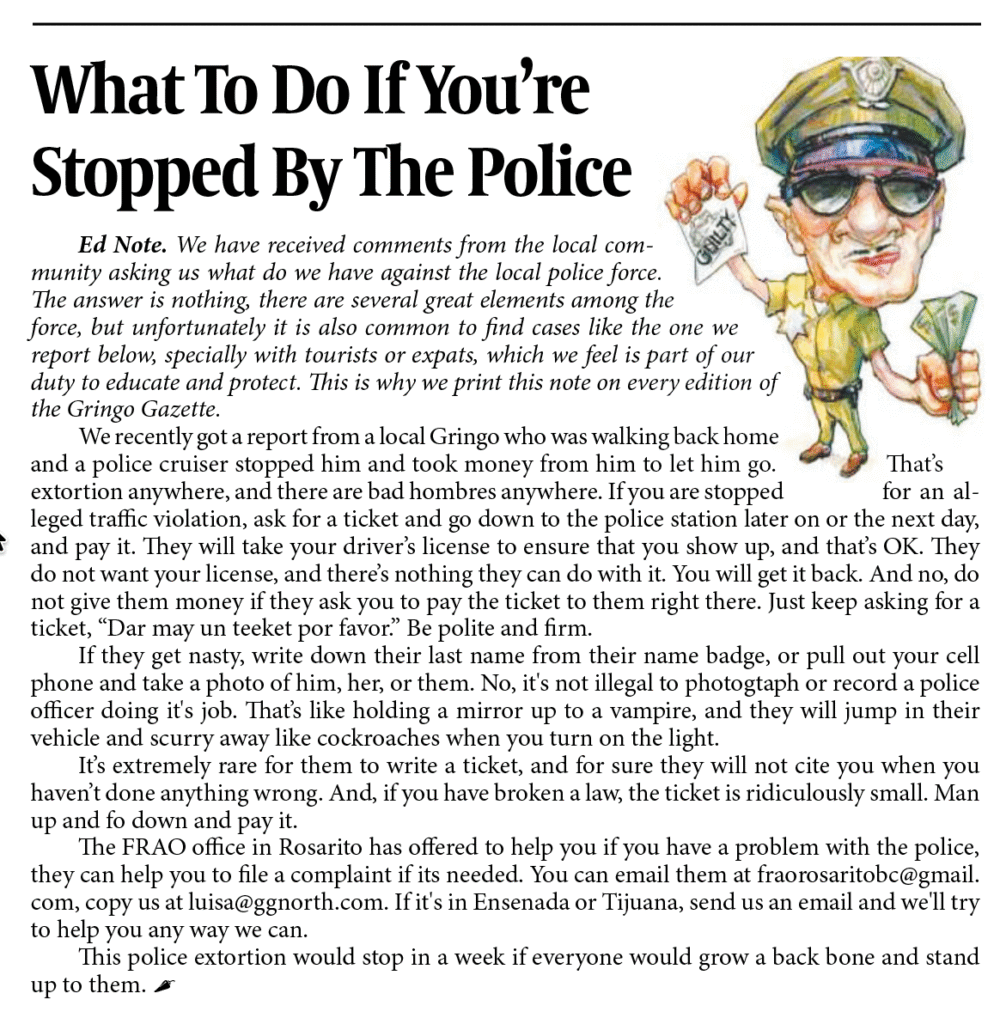
Longtime readers of Gringo Gazette North will recognize this issue isn’t new. In fact, we print a “What To Do If You’re Stopped by the Police” notice in every single edition — not because we’re anti-police, but because we’re pro-reader. The vast majority of officers do their jobs correctly, but when abuses happen, especially involving tourists and expats, knowledge becomes protection. That recurring notice exists to inform, not inflame — and to remind visitors and residents alike that extortion only works when people don’t know their options.
Rosarito: Second Stop, Second Problem
The problem doesn’t stop at the Tijuana city limits. Down the coast in Playas de Rosarito, tourism has reportedly dropped sharply — by some estimates up to 20% — as a result of persistence of state and federal police extortion cases. Hotels, restaurants, and especially bars — once hotspots for young tourists — are feeling the pinch as visitors slow their spending or skip the trip altogether.
Rosarito’s economy is tightly tied to cross-border visitors, so when those travelers start hearing stories of police hassle at the border or on the highway, it has a cascading effect.
Ensenada: Quiet But Not Unaffected
Ensenada — long a favorite for cruise passengers, wine lovers, and weekenders alike — hasn’t been hit as hard, but it hasn’t been spared either. Investigations and arrests tied to police corruption have cropped up across Baja California police forces — including in Ensenada — underscoring that misconduct isn’t isolated to any one municipality.
Even if officials aren’t pointing fingers publicly, the sense of “who can you trust?” is palpable. When local news outlets report on internal investigations or arrests involving police from multiple cities — Tijuana, Rosarito, Mexicali, Ensenada — it adds fuel to the fire of tourist hesitation.
Why This Matters Beyond Headlines
Let’s put some perspective on this: more than half of Baja California’s tourism is foreign, and about 93% of that comes from the United States, mainly California residents. These are your neighbors, families with kids, snowbirds, and weekend visitors — not thrill seekers risking life and limb. Yet when news of police misbehavior spreads — whether through social media, travel forums, or word of mouth — it changes travel plans fast.
Tourism isn’t just about beaches and restaurants: it’s a binational economic engine for this region. Every dollar spent here supports jobs in hospitality, retail, real estate, medical services, and transportation on both sides of the border.
What Authorities Say They’re Doing About It
To be fair, authorities at both the municipal and state level say they are aware of the damage these incidents cause and insist steps are being taken. Local governments in Tijuana and Rosarito have reiterated internal oversight measures, including disciplinary reviews, citizen complaint channels, and renewed instructions to officers regarding interactions with tourists. State authorities have also promoted the use of internal affairs units and encouraged visitors to formally report misconduct rather than resolve encounters on the street. In recent months, officials have publicly stated a “zero tolerance” stance toward extortion and improper conduct, particularly in areas with high tourist traffic. Whether those measures are translating into consistent behavior on the street, however, remains the question many visitors — and local businesses — are still asking.
What’s Next?
Local business leaders aren’t staying quiet. Calls for reform, better oversight, clearer complaint channels, and police training focused on visitor protection are growing louder. State agencies have even set up new channels for travelers to report misconduct and promised a principle of “zero tolerance” for irregularities.
But change won’t happen overnight. Tourism thrives on confidence — and right now, for too many travelers, that trust is eroding.
Baja’s sunny skies and salty surf are still here. But if some of those in uniform don’t clean up their act, they might just chase away the very tourists this region needs to thrive.