

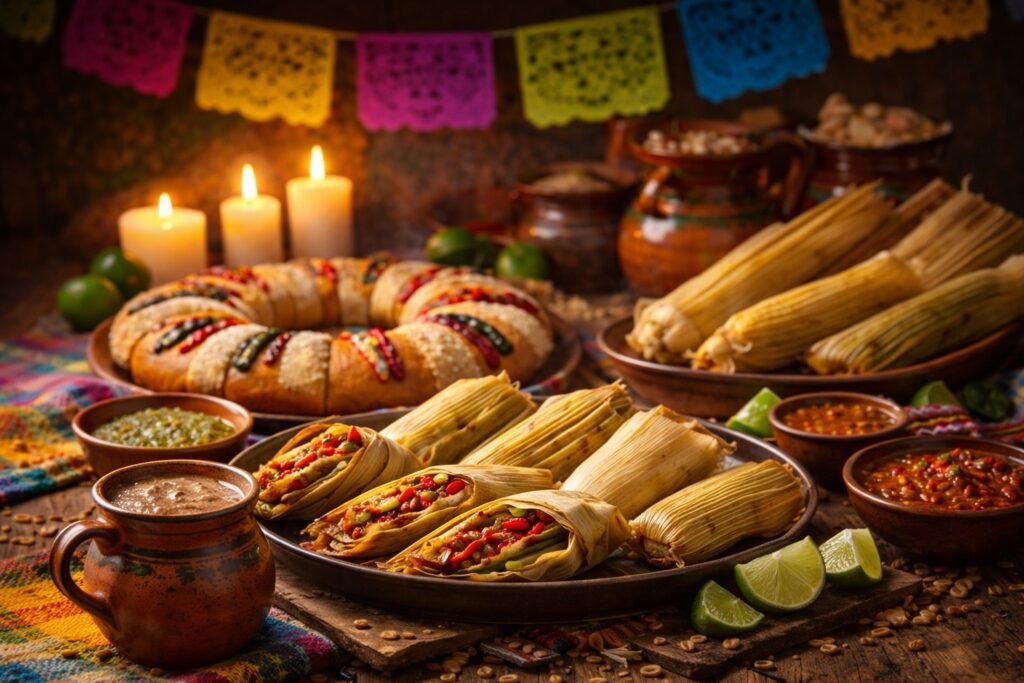
February 2 arrives every year with the same quiet certainty.
No reminders are needed. No calendar alerts required. Someone, somewhere, already knows they are buying tamales. Officially, the day is known as Día de la Candelaria. Unofficially, and far more accurately, it goes by other names: La Calendaria, el Día de la tamaliza, or simply that day you pay for the rosca. Different labels, same outcome. A table fills. Steam rises. Debts are settled in masa.
The roots of the celebration are Catholic. Candlemas marks 40 days after Christmas and commemorates the Presentation of Jesus at the Temple, along with Mary’s purification. It arrived in Mexico through Spain during the colonial period, carrying its rituals, its symbolism, and its fixed date. Yet, like many imported traditions, it did not remain unchanged for long.
Once it reached Mexican soil, Día de la Candelaria encountered something older and far more stubborn: corn.
Over time, the Catholic feast blended seamlessly with Indigenous agricultural rituals tied to planting cycles, fertility, and communal food. Rather than erasing pre-Hispanic customs, the celebration absorbed them. Corn stayed at the center of the table. Tamales, already essential to Mesoamerican life, became the natural bridge between belief and everyday practice.
This, however, is where January enters the story.
On Día de Reyes, families gather around a rosca. The sweet bread, inherited from European traditions, hides a small Niño Dios figure inside. Finding it feels accidental. It is not. Whoever pulls the Niño agrees, knowingly or not, to host the Candelaria celebration weeks later.
That responsibility is not symbolic. It is logistical. The Niño must be dressed, blessed, and presented on February 2. More importantly, the host must feed the group. Thus, the rosca becomes a quiet contract. The deadline arrives in the form of tamales.
Tamales were never an arbitrary choice.
Long before Mexico existed as a nation, they were already part of daily life, ritual offerings, and travel provisions across Mesoamerica. Archaeological records trace them back thousands of years. Their endurance is not accidental. They are practical, ceremonial, and deeply communal.
So when Catholic dates merged with Indigenous traditions, tamales stayed. They always had.
Today, a proper tamaliza extends beyond the tamal itself. Champurrado warms the room. Atole and coffee keep conversations moving. Fillings matter. Masa texture matters even more. If it is too dry or too heavy, everyone notices, even if no one says a word.
Across Mexico, millions of tamales are prepared and sold around this date each year. February becomes a national exercise in shared obligation and collective appetite. Once the plates are full, nobody remembers who complained about paying.
In Baja California, tamales follow their own map.
Tijuana has its long-standing stops near the 5 y 10 area. Rosarito’s free road offers reliable steamers, especially for corn tamales. Ensenada locals know that the stretch toward Maneadero is not just a drive, but a tradition, where elote tamales are purchased almost by reflex. Further south, Mexicali and San Felipe maintain their own dependable corners, usually accompanied by champurrado and zero small talk.
In Baja, tamales are not something you discover. You already know where to stop.
In the end, Día de la Candelaria is not about obligation or punishment. It is about continuity. Faith meets food. Corn outlasts calendars. A small figurine passed around in January quietly feeds a room in February.
So remember this next time you reach for the rosca.
It is never just bread. It is an edible contract. And the penalty clause is always delicious.