


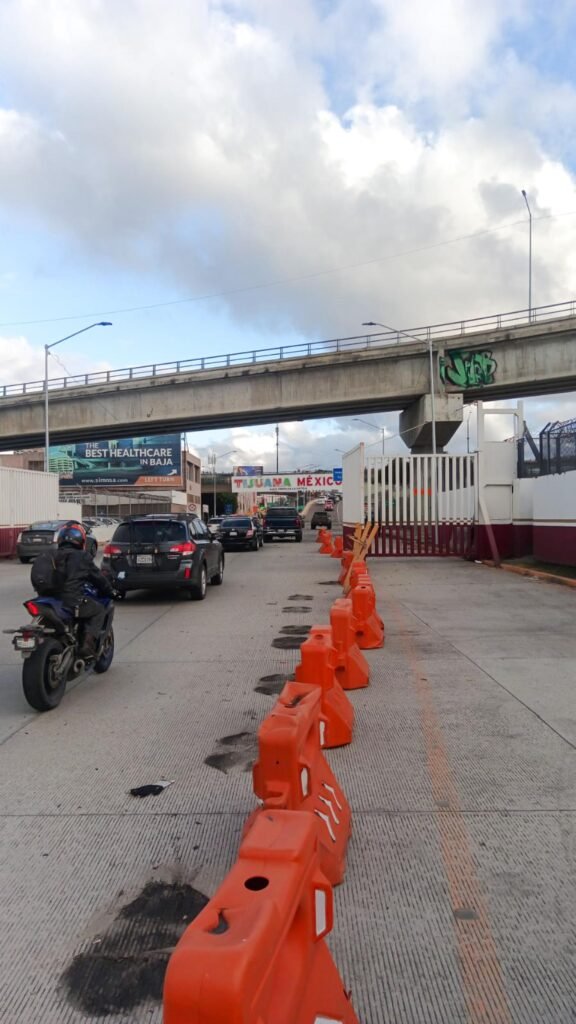
On February 19, state officials announced that an additional southbound vehicle access gate had been enabled at El Chaparral in Tijuana after coordination between state and federal authorities. For drivers entering Baja from California, that operational shift matters because this crossing sets the pace for everything that follows.
What Changed at the Crossing
According to the official statement, Tourism Secretary Miguel Ángel Badiola Montaño worked with federal customs authorities to address congestion at the Mexico-bound lanes. The adjustment involved relocating National Guard patrol units that were occupying operational space. Once repositioned, an additional access gate could be opened.
There was no expansion project and no new concrete poured. Instead, authorities modified how the existing space functions. While that may sound modest, border traffic often hinges on these internal adjustments.
State messaging attributes the move to coordination with the administration of Governor Marina del Pilar Ávila Olmeda and federal authorities. We report that as the official framing. What can be independently confirmed is that the additional gate is operating.

Our Friday Test Drive
Because press releases do not move cars, we tested the change ourselves on Friday, February 20, traditionally one of the heavier traffic days into Tijuana.
From the moment we exited the customs inspection area, we drove through the newly reconfigured flow and continued along the entire new stretch of the elevated viaduct. We followed it to its current end point, where it descends near the sign that reads “El Mirador” or “Scenic Road.”
The total time for that entire segment was five minutes.
Yes, five.
On a Friday. Traffic remained steady throughout the elevated section. We did not encounter abrupt compression or stalled pockets along the route.
What the Data Shows — and Doesn’t
Southbound crossings into Mexico do not provide a standardized, publicly accessible wait-time dashboard comparable to northbound crossings into the United States. Because of that, comprehensive before-and-after statistics are difficult to produce.
However, the operational change is visible, and the additional access point is functioning. Our February 20 test offers one concrete observation under peak conditions. Whether that result holds across multiple high-volume days will determine the long-term impact.
Consistency, not headlines, will define success.
Why It Matters for Expats and Visitors
El Chaparral carries commuters, business traffic, airport runs, medical visitors, and weekend travelers. When it slows, schedules unravel quickly. When it moves efficiently, the rest of the city feels more accessible.
Meanwhile, even modest reductions in congestion can ease pressure during peak windows. If the additional gate remains active through Fridays and busy weekends, regular crossers will feel the difference without needing official confirmation.
What to Know Before You Go
Inspection procedures remain unchanged, and customs protocols still apply. Because border traffic can shift suddenly, allow reasonable buffer time during holidays and special events, even if recent crossings have been smooth. Follow posted lane signage carefully, as configuration may adjust depending on enforcement needs. For those curious about the full route, we shared video of our February 20 drive on YouTube and across our social media platforms.
Border efficiency rarely arrives with celebration. Instead, it shows up in minutes saved and calmer commutes.
If five-minute transitions from inspection to Scenic Road become routine, drivers will notice immediately. And around here, that qualifies as No Bad News.