

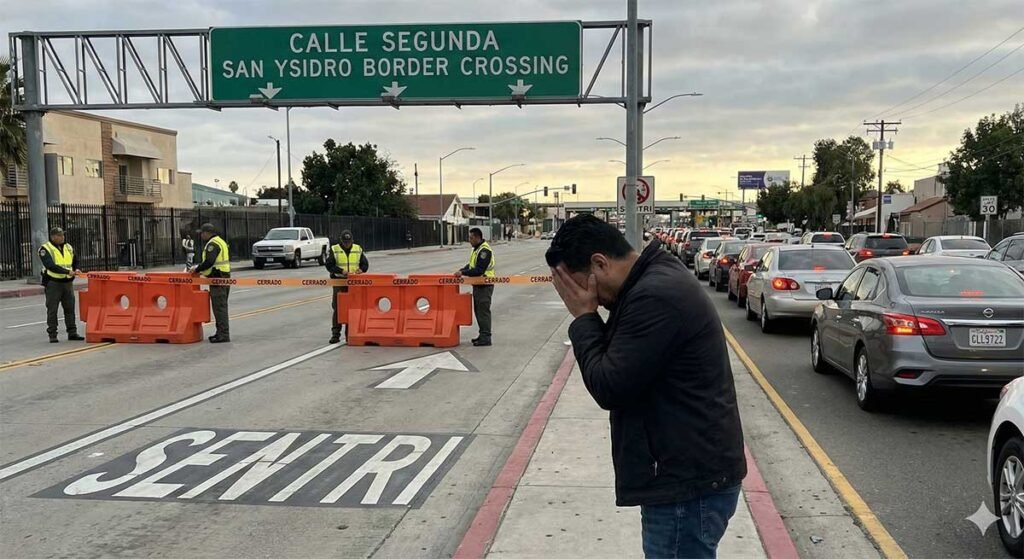
Ai Generated Image. Not a real depiction of the Calle Segunda SENTRI entry point.
A recently opened SENTRI access lane on Calle Segunda in downtown Tijuana is entering a decisive phase, and its future may depend largely on whether drivers choose to use it.
The lane, launched as a 120-day pilot program, was designed to ease congestion at the San Ysidro Port of Entry by offering SENTRI users an alternative to the heavily used Padre Kino route. While early data shows progress, authorities have made it clear that continued operation — and possible expansion — will require significantly higher participation.
According to officials from Tijuana’s Secretariat of Economic Development (SEDETI), usage of the Calle Segunda SENTRI lane has reached between 12% and 18% of total SENTRI crossings during its first two months. While that represents steady growth, U.S. authorities have set a benchmark of 25% to 30% participation before committing to permanent infrastructure upgrades.
The incentive is substantial. If usage meets the target, U.S. Customs and Border Protection has indicated it would move from operating one SENTRI booth to two permanent booths, with a third opening dynamically during peak congestion. The system relies on real-time monitoring, allowing officials to respond as the queue advances.
SEDETI officials have explained that once the Calle Segunda line reaches the level of the Fast Lane booths, additional SENTRI booths are automatically activated. If the line extends further toward Calle Segunda itself, a third booth is opened to reduce wait times.
The pilot program is currently at its midpoint, both in timeline and performance. A final decision on whether the Calle Segunda SENTRI lane becomes a permanent feature is expected by the end of February, when the 120-day evaluation period concludes.
Recent user experience suggests the lane’s performance has improved. While some drivers reported slower crossings roughly a month ago compared to Padre Kino, conditions appear to be stabilizing as traffic patterns adjust. Last Friday, SENTRI users reported near-immediate crossings through Calle Segunda, highlighting the lane’s potential when traffic volumes are sufficient to trigger additional booth openings.
Officials on both sides of the border remain cautiously optimistic, but they emphasize that the outcome now rests with drivers. Without increased adoption, the pilot risks falling short of its participation goals, which would likely result in the lane reverting to regular traffic use.
For SENTRI holders, the message is clear: use of the Calle Segunda lane is not only a convenience — it is a determining factor in whether the option continues to exist. If participation increases in the coming weeks, the project could lead to faster, more reliable crossings for years to come. If not, the opportunity may close along with the lane itself.


It would be great if there was some way to estimate how far the Calle Segunda SENTRI lane is backed up, in Google Maps it shows along with the regular lanes (red) and the CBP BWT app doesn’t list it, presumably because it’s in a trial stage.
Do you also have a cover of READY lanes? there are more READY lanes than General, but not like Sentri need to pay for use, I just recently got to know that US Permanent Resident, or green card is also RFID enabled, and can enter to the READY lanes, but not sure how can drive into the READY lanes, not into Sentri lanes?