

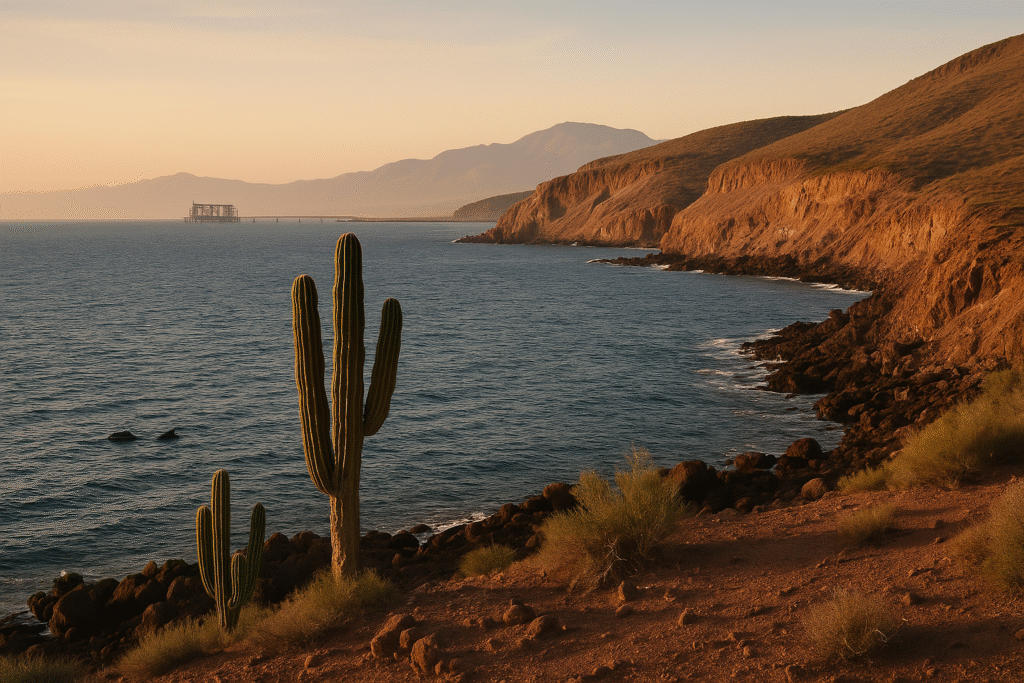
The Gulf’s New Mystery
The Gulf of California loves intrigue. Sometimes whales perform surprise shows. Sometimes fishermen argue about the real inventor of the fish taco. This month, though, the mystery comes from far away. Several reputable outlets report that nine UN Special Rapporteurs sent a formal communication to Mexico about new LNG projects planned near the Gulf.
Although the topic sounds serious, one fact remains clear. No one has seen the actual letter. It has not been published by the UN, Mexico, or any transparency portal. Therefore, we cannot quote it or describe it as if we held it in our hands. And in Baja, where rumors travel faster than manta rays, that simple truth matters.
What LNG Means for Baja
Before diving deeper, LNG stands for Liquefied Natural Gas. Companies cool natural gas to –162 °C so it becomes a liquid. As a result, it becomes easier to store and ship across the world. Because of this, LNG terminals often transform entire coastlines.
The projects mentioned in global reports include Saguaro Energía, Vista Pacífico, AMIGO LNG, and GNL Cosalá. These facilities could move large volumes of U.S. natural gas toward Asia. Consequently, the Gulf may face more tanker traffic, new industrial zones, and long-term changes to nearshore ecosystems.
What We Know for Sure
Even without the document, some facts remain solid. Environmental groups, scientists, and coastal communities have raised concerns for months. The Gulf is a UNESCO World Heritage site, after all. It shelters a remarkable concentration of marine mammals, plus the fisheries that feed many Baja families.
Across multiple outlets, the reported concerns fall into four clear categories:
- Missing cumulative environmental assessments
- Climate commitments under the Paris Agreement
- Public access to information
- Indigenous consultation rights
These points appear again and again in independent reporting. Because of this consistency, they form the safest ground we have.
SEMPRA’s Role—And Non-role
Many readers ask whether this debate involves SEMPRA, since the company shaped parts of Ensenada and Vallecitos. Their investments built infrastructure, expanded energy capacity, and supported regional growth long before Baja appeared in international energy discussions.
However, based on all available information, SEMPRA is not part of the projects referenced in the UN-related reports. The developers behind Saguaro, Vista Pacífico, AMIGO LNG, and Cosalá come from different corporate groups. Even so, SEMPR A’s long presence in Baja reminds us how energy decisions echo for decades.
As a region, we have experience balancing development and coastline protection. Because of that history, Baja enters this conversation with more wisdom than many assume.
What Remains Uncertain
Although the story grows daily, the central piece stays missing. The UN letter has not appeared anywhere. There is no PDF, reference code, or scanned page. Until it becomes public, we cannot confirm its tone, wording, or recommendations.
This uncertainty creates tension. Still, it also creates opportunity. When facts feel incomplete, communities often pay closer attention. Baja has always excelled at that.
Why Baja Should Pay Attention
Every large coastal project affects the region. The Gulf is not just scenery. It is a pantry, a highway, a workplace, and a cultural anchor. Because of this, any transformation should be transparent. Baja residents understand how easily progress can drift into imbalance. We live beside an ecosystem that forgives storms but not neglect.
Moreover, local fishermen, whale-watching crews, and small tourism businesses depend on a healthy sea. When new vessels cross the Gulf, they change more than shipping lanes. They change rhythms, habitats, and long-term possibilities.
A Reflection for the Region
This story is not about choosing sides. Instead, it is about choosing clarity. Baja has always walked the line between beauty and ambition. We innovate, build, explore, and experiment. Yet the Gulf constantly reminds us of scale—and of the wisdom found in careful steps.
Because of that, the most important action now is simple. We must stay informed. We must ask questions. And we must demand transparency, whether the letter is real, delayed, or still floating between inboxes in Geneva.
Until the day the communication becomes public, Baja will continue watching the horizon. And in this region, watching the horizon has always been a form of love.


1 Comment