

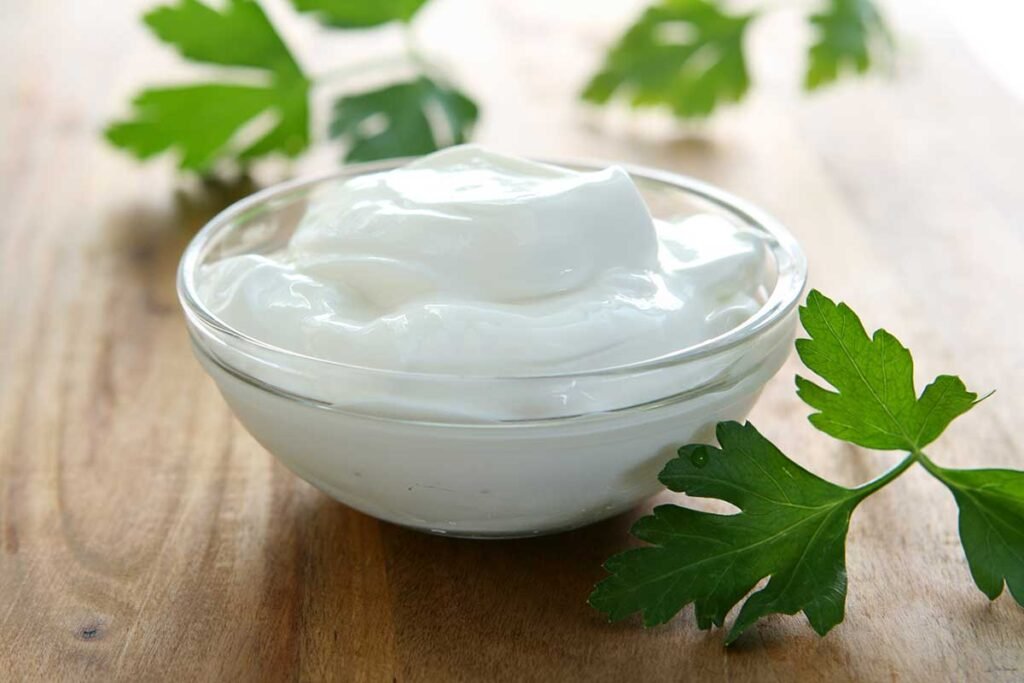
If there’s one thing that consistently confuses newcomers, long-timers, and every hungry traveler stuck in the dairy aisle at Calimax, it’s this: Why is Mexican crema not sour? And where on earth do you find actual sour cream?
Let’s fix that today.
Mexico and the United States use the same word, “cream,” but they’re talking about two different worlds. In the U.S., sour cream is thick, tangy, and ready to crown a baked potato like it’s royalty. In Mexico, crema is a whole category with multiple personalities, textures, and levels of tang. Once you know the differences, grocery shopping becomes a lot less mysterious. And your tacos get happier, too.
Here’s the breakdown.
Why the difference?
American sour cream evolved around commercial fermentation. U.S. dairy producers standardized the process early: pasteurized cream plus controlled bacterial cultures, producing a stable, tangy, very thick product. Mexico went in a different direction. Traditional Mexican dairy wasn’t fermented intentionally; it relied on fresh milk, natural separation, and mild culturing at most. That created creams that are smoother, sweeter, and far less acidic. So although both countries use “cream,” each one built a completely different dairy tradition based on climate, refrigeration history, and cooking styles. That’s why the American and Mexican versions feel like cousins that grew up in separate households.
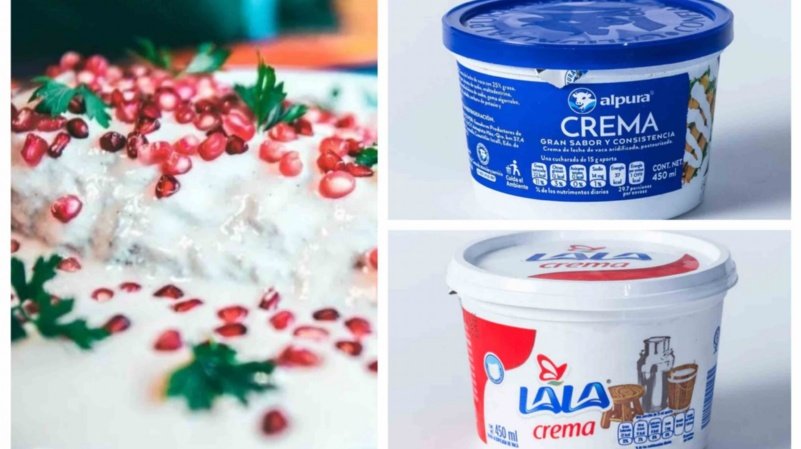
Photo courtesy of Radio Formula
Crema
This is the standard Mexican crema you’ll find all over the country. It’s silky, mild, and not sour at all. Think of it as a spoonable, pourable cream with the consistency of a loose yogurt. If you order tacos anywhere in Mexico, nine times out of ten, this is what will be drizzled on top.
It doesn’t try to be sour cream, and it isn’t pretending to be. It’s its own thing, and for most Mexican dishes, it works beautifully.
Crema Ácida
Now we’re getting closer to familiar territory. Crema ácida is Mexico’s version of sour cream. You’ll see it more often the farther north you go, especially along the U.S. border. American influence plays a big role here, and grocery stores in Baja California and Sonora tend to carry more acidic varieties for exactly this reason.
But keep expectations realistic: not all crema ácida brands match the thick, dense texture of American sour cream.
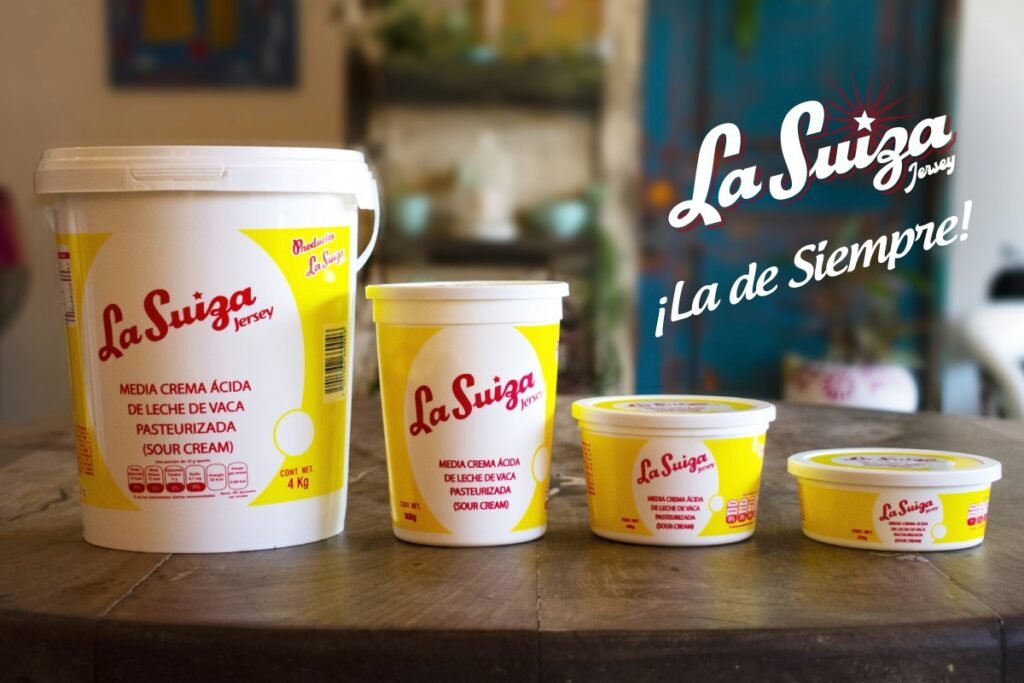
La Suiza: The Closest Match
If you’re specifically chasing the American-style sour cream experience, the brand you want is La Suiza. It’s the go-to recommendation among expats for a reason.
La Suiza is still a little thinner than American staples like Daisy, but compared to regular Mexican crema, it’s much thicker, tangier, and behaves like the real deal on nachos, baked potatoes, chili, and anything else that demands a proper dollop.
If you see it, grab it. It sells out more often than you’d think.
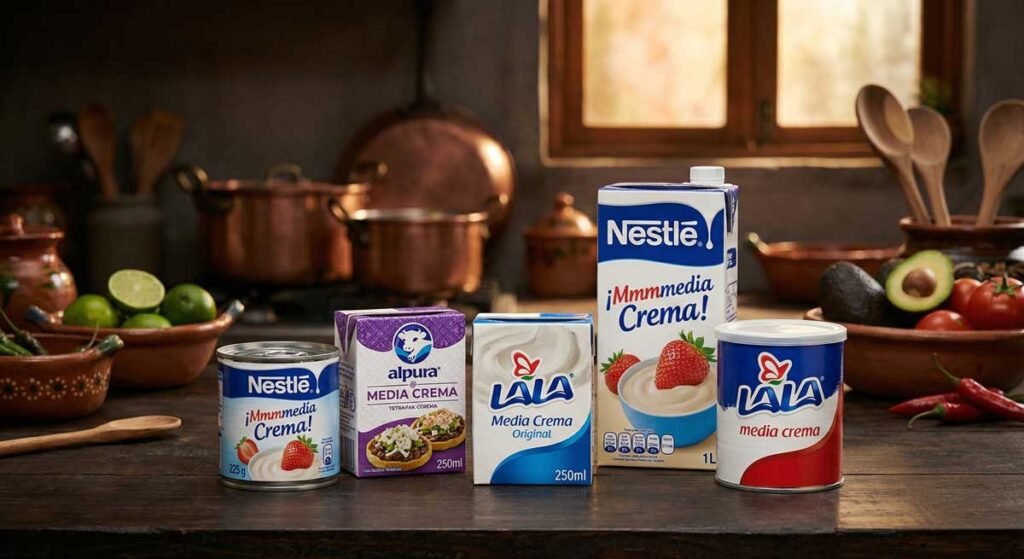
Media Crema
This is where expats get thrown off. Media crema is not sour, not meant for topping tacos, and not the missing dairy ingredient you didn’t know you needed. But it is incredibly useful.
It comes in a shelf-stable can or carton, which means you can forget about it in your pantry for months and it will still love you back. It’s thinner than sour cream and used mostly in cooking: soups, sauces, pastas, casseroles, desserts.
If you’ve ever bought a can thinking it was sour cream, don’t worry. You are not the first, and you won’t be the last. Welcome to Mexico.
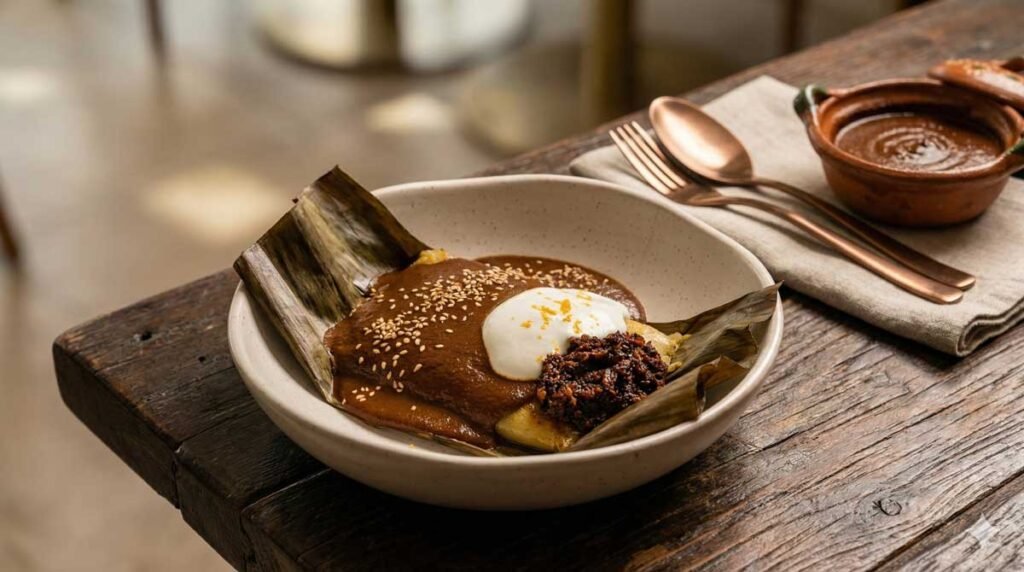
Sweet potatoe tamal with mole, chile morita salsa and crema de rancho by David Rocha / Comal
Crema de Rancho
This is the cream Mexico’s grandparents grew up with, and it’s having a comeback, especially in gourmet kitchens, farm-to-table restaurants, and fancy coffee shops that now charge extra for “artisanal dairy joy.”
Crema de rancho is made the old-fashioned way. Fresh, raw milk is left to rest so the cream naturally rises to the top. That top layer is collected and lightly cultured. The result is thick, rich, and slightly tangy, somewhere between clotted cream and crème fraîche, but with a very Mexican soul.
If you see it at a market or restaurant, try it at least once. It puts regular crema to shame.
So What Should You Use?
If you’re making Mexican food: use regular crema. It blends better with local flavors, and it’s what most recipes expect.
If you’re recreating U.S. comfort food: look for crema ácida or, ideally, La Suiza.
If you’re cooking: keep media crema in your pantry. One day you’ll need it and thank yourself.
If you’re feeling adventurous: order crema de rancho and brag to your foodie friends.
Living in Mexico comes with these tiny cultural surprises, and navigating dairy is just part of the fun. Once you know what each cream does, you stop searching for “the sour cream aisle” and start enjoying the options. And in a place where tacos are basically a food group, knowing your crema makes life taste a whole lot better.